Time doesn't pass for the person who's left behind. It's a perpetual limbo
Die, My LoveTime doesn't pass for the person who's left behind. It's a perpetual limbo is a phrase that crystallizes the novel's understanding of grief as a state of frozen suspension. It emerges in the narrator's account of her mother-in-law's widowhood, describing a condition in which the ordinary flow of days ceases to function for the bereaved, leaving them stranded in an unchanging present. The expression is not merely a description of sadness but a diagnosis of how loss fundamentally alters the experience of temporality itself, a theme that runs through the book's treatment of death, memory, and the inadequacy of language to capture such experience.
The Mother-in-Law's Grief
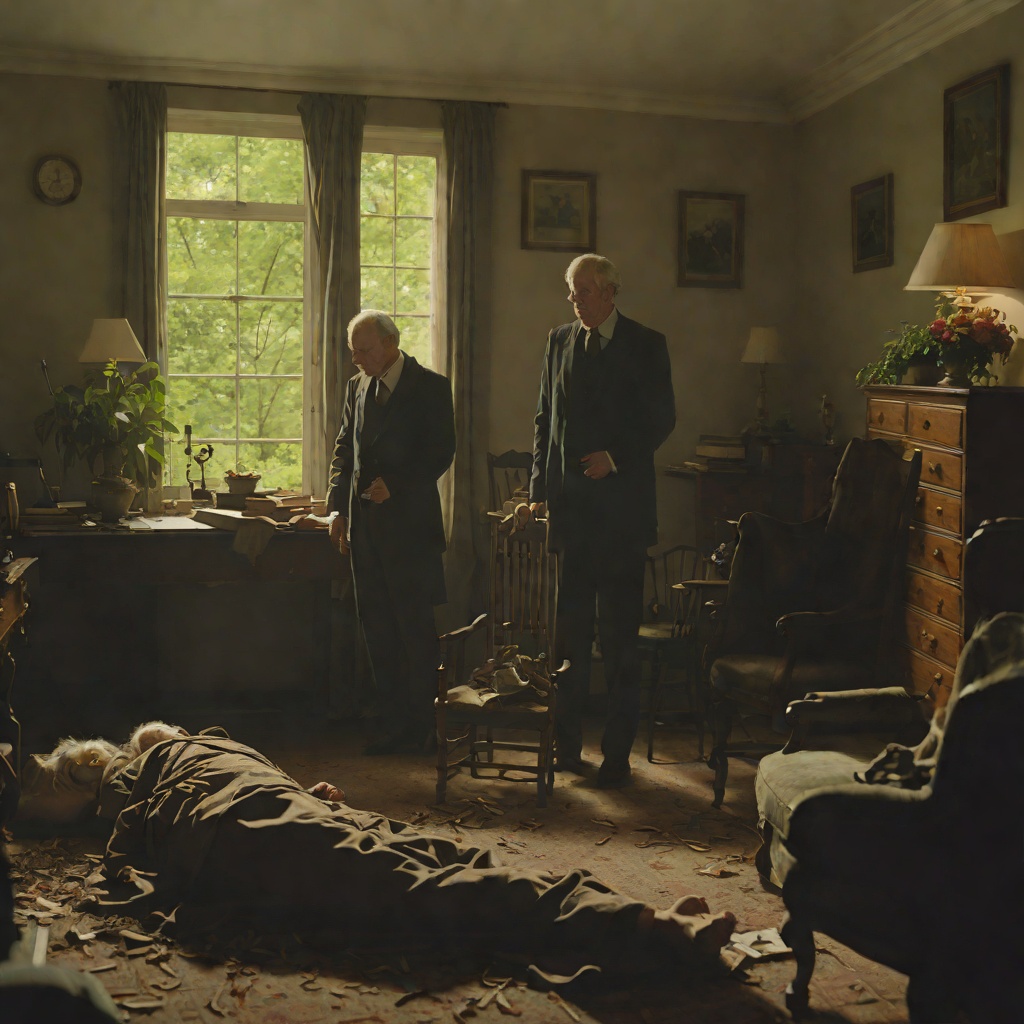
The phrase arises directly from the narrator's observation of her mother-in-law in the aftermath of her husband's death. The widow continues to cook for two, changes the pillowcases, and mends her dead husband's underwear that was torn at the crotch, as though he might still return to wear them. She relives his death day after day, unable to move beyond the moment of his passing. The narrator describes her sitting in a daze, her head inside a bell, living in her body as though it were an infested house, tiptoeing through it trying not to touch the floor. The only time she is at peace, she says, is in her sleep, when the spirit scatters. Yet even sleep offers little refuge, as she suffers from serious difficulty sleeping and frequently sleep-walks, once strolling through the village in a nightie shouting Fire! and another time using a shoe as a phone to converse with God.
The Texture of Stasis
The expression's power lies in its concrete imagery of a life that has become unmoored from time. The mother-in-law's days blur into a single unchanging state, marked by small, compulsive rituals that preserve the illusion of continuity with the dead. She eats white bread that has been left out in the kitchen for days, does not check the expiry date on the medication she started taking the day of the funeral, and fails to scare away the flies or remove the eggs they have laid in the jar of homemade chestnut jam. She watches the fingers bringing the bread to her mouth as though they belong to someone else and chokes, because time does not pass for the person who is left behind. The narrator compares this state to a wet shirt, clammy against the body, something that does not go away, that will not come unstuck. The image suggests a grief that is not a discrete event but a permanent condition, a garment of mourning that cannot be removed.
The Marriage Behind the Mourning
The narrator's reflection on this perpetual limbo is complicated by her frank assessment of the marriage that produced it. Her father-in-law had never been one to spend long hours embedded inside his wife, nor entire afternoons, summers, clinging to her, nor days in the countryside entering her, satiating her. He did not even consider whether or not she got aroused; she was that hollow, that bare. He imagined her as having a stone in the depths of a cave instead of a vagina, and always pictured her covered in the little shawls she embroidered. He got used to loving her as though she had been born that way, and she got used to being loved that way. The perpetual limbo of the widow is thus not the product of a passionate union but of a companionship built on mutual accommodation and emotional distance, which makes her frozen grief all the more striking. The narrator notes that although her life partner had never truly known her, he had been her companion nevertheless, and that was enough to leave her stranded in time when he was gone.
The Wake and the Loss of Words
The expression also resonates with the narrator's own response to her father-in-law's death, which she distinguishes from the widow's grief. It was not so much the death itself that affected her, but rather the loss of his words, his turns of phrase, his thick, spit-filled tone. She mourns his particular way of speaking, the verbal texture of his presence, even as she acknowledges the emptiness beneath it. At the wake, the guests pronounced him an excellent father and husband, better than excellent, but the narrator observes that so much screwing around, so many memories of bravery from the war, so much debauchery, in the end no one really had anything to say about him. The procession made its way to the inn where the dead man had been a regular, drinking his beer and aperitifs every lunchtime and telling witty tales of his time on the front line. His widow revealed that he used to sit for hours in the semidarkness of the living room facing the lit-up tree, a detail that complicates the public image of the gregarious veteran. The phrase about time not passing thus stands in tension with the narrator's own experience, which is less about frozen time than about the irrecoverable loss of a particular voice, a loss that language itself cannot repair.
The Expression as a Window on the Novel's Themes
The expression functions as a key to the novel's broader meditation on loss and the limits of articulation. It names a condition that resists description, a state of being that the narrator can only approach through metaphor and concrete detail. The perpetual limbo of the bereaved is one instance of a larger pattern in the book, in which characters are trapped in states they cannot escape or name, from the narrator's own ambivalence toward motherhood to her sense of exile and displacement. The phrase also gestures toward the novel's concern with the failure of language, the way words prove inadequate to contain the weight of experience. The mother-in-law's grief is not something that can be spoken or resolved; it is a condition that simply persists, like the wet shirt that will not come unstuck. In this sense, the expression is not just a description of one woman's mourning but a statement about the nature of loss itself, and about the impossibility of moving on from certain kinds of absence.